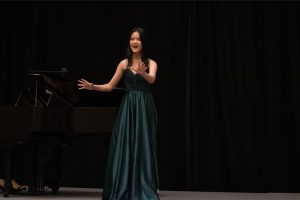
Roy speaks openly about losing more than 200 pounds on social media, the years-long process of relearning his instrument afterward, and how the experience reshaped both his self-image and the way the opera industry sees him. His story is not simply about weight; it is about identity and the often-unspoken intersection of the classical voice and the human body.
Have you ever walked off stage frustrated because the magic wasn’t there—wondering what happened and why you couldn’t perform with greater ease and flow? Following is a short description of the four levels of consciousness through which your performances can feel like four completely different realities.
One thing singers need to know is how to communicate, and not just with our beautiful singing. Learn more about professional email correspondence in this article.
At the University of Redlands School of Performing Arts, you’ll do more than just study your craft—you’ll live it. Whether you're a musician, actor, dancer, or designer, this is a place where creativity thrives and collaboration is at the heart of everything we do.
The New Jersey opera scene’s “best kept secret” gets a new name for an exciting new era.
One new book published by Routledge explores valued vocal traditions, and the other makes the case for change.
Follow your heart, and don’t give up. We believe you will be led up, down, and around the perfect path for you. Work hard and you can achieve anything. We see it happening for you! Yes, it is time for you to SHINE!
Dr. Aston shares a mysterious missing range in a patient, and the medication change that solved it.
Your artistry, expressed. At Hartt, growth in technique and musicianship, guided by distinguished faculty, is the focus of vocal study. The Hartt School provides a one-of-a-kind experience for the emerging twenty-first century artist, teacher, and scholar.
Veteran voice teacher Susan Eichorn Young reveals how cross-training benefits belters, who may secretly be high sopranos!
Every good mezzo has probably sung Mozart’s “Smanie implacabilli” or “Voi che sapete” to work on legato and style or to satisfy that Mozart aria requirement for an audition. Below are eight arias that are sure to liven up any mezzos’ audition package.
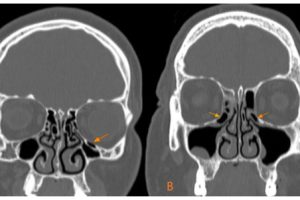
Haller cells are just tiny cavities between the maxillary and ethmoid sinuses. They are not always present and when they are there they are usually not a problem unless they are obstructing drainage of the other sinuses into the nose.