Crossover Corner: Powerful Pivoting for Teachers
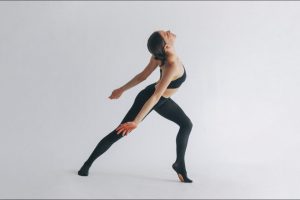
Pivoting is essential for singers and voice teachers of all kinds. Read on for an in-depth discussion on how to pivot, and not just when moving a couch!
Hi gang, and welcome to “Crossover Corner!” Let’s get things going with some word association. What’s the first image or scene you think of when you hear the word pivot? Don’t overthink this. If you’re anything like me, your mind’s eye may have flashed back to the episode of Friends where Chandler and Rachel attempt in vain to help Ross carry a new couch up the stairs to his apartment. The more they struggle, the louder David Schwimmer (Ross) barks out his order to “Pivot! Piiivot!!! Piivooot!!!!”
It’s one of the show’s most iconic scenes and it includes a favorite line to quote when helping someone move to a new apartment—be it a West Village walkup or a new dorm room—smash cut to an embarrassed college student as their 90s-era parents yell to each other to “Pivot!”
Now what’s the next image that comes to mind? Maybe you’re picturing something that turns, like a sail on a boat’s mast. Or maybe you think of an activity, like a sports ball—yes, I know, I’m getting dangerously close to the edge of my depth with “sports ball.” Perhaps you’re imagining a basketball player establishing their center, moving one foot freely while keeping their pivot foot planted. I’m more inclined to think of a dancer who’s able to rotate on one or both feet, shifting their body to face a new direction while still being allowed to continue the flow of movement.
But what about pivoting as less of a mechanical concept and as more of a paradigm shift or an adjustment, or a change of plans altogether? Most of us can relate to the concept of pivoting in the classroom or the voice studio. It can be as simple as a student forgetting their rep book and a decision in the moment to pull a Cole Porter anthology off the shelf and use the opportunity to teach a new song (something I’ve done many times, and “It’s Delovely” from Anything Goes is my go-to). Or maybe you’ve prepared a class or ensemble activity and are surprised by an unusual amount of absent students, and now you have to change course midstream to engage the students that are in attendance, regardless of the time and effort you put into planning the activity and lesson plan.
So, now, let’s take a moment for some more word association. Forget about Friends and sports balls and let’s spend some time on feelings. What comes up for you emotionally when you contemplate pivoting as a concept? We’ve all probably known, or been, someone who has lost a job or dealt with the fallout of a long-planned gig or a previously depended-on church job that’s fallen through. Feelings of surprise, frustration and, frequently, confusion and anger can come up for a lot of us. But what about a type of pivoting that’s a bit less fraught. Many of us begin using the word pivot after the fact—perhaps hindsight or some therapy have helped us to reframe and rename a past career or life shift as a pivot to the next thing—to the next job, the next relationship, you name it.
Here let’s look at a few ways in which a pivot is something we teachers can embrace or, better still, plan for. If you aren’t a teacher and are reading this, please do keep reading! Chances are high that you have a teacher and that you will likely be called on to do some teaching in your own career. You’re responsible for a great deal of the content experienced in your voice lessons, so having some insight into the minds and journeys of your teachers can only serve to empower your experiences with them. While making a career pivot certainly can mean leaving an old one for a new professional adventure, in our discussion let’s use the word pivot to describe a meaningful and substantial shift to another element or aspect of our skills, training, and desires.
Some quick back story for this topic here in “Crossover Corner.” As a voice teacher, it’s my joy to share in artists’ journeys and to provide mentorship when asked. But earlier this year, I continued to feel a deep yearning to expand and grow in my daily work with students. I told the universe that I was open to an additional way to connect and I was inspired by how quickly the universe replied!
In the middle of teaching a Zoom voice lesson, the words Life Coach popped into my head. and I grabbed a pen and paper and wrote them down. I dove down related YouTube rabbit holes and learned more about how being a life coach is quite different from being a therapist or consultant. I’d be hard pressed to meet a voice teacher who hasn’t felt a bit like a therapist or been approached by students with topics better suited for a therapy session. I know I certainly brought them to my voice teachers!
The more related content I consumed, the more excited and passionate I became. I ended up learning about a certification program through City College of New York and spent an hour on the phone with a student service specialist who generously answered all of my questions. By the end of the call, she revealed that she was a singer who’d pivoted from performing while she raised her kids and was considering pivoting back to performing in some way. By the end of the call, she’d registered me for my course and I’d given her a suggested repertoire list! Several months later, I received my certification to be a CPC (Certified Professional Coach),* and officially launched the life coaching side of my business, Peter Thoresen Life Coaching—not to replace my work as a voice teacher, but to learn new skills for an additional aspect of my practice that ultimately enhances my work with and connection to my voice students.
So, as we get ready to go into the new year and new semester, and a new season of preparing students for juries, recitals, and auditions for productions and young artist programs, let’s consider one potentially powerful pivot plan aimed at facing us in a new direction while continuing our flow, like the dancer mentioned earlier.
- Consider taking an inventory of what you feel might be missing from your day to day or semester, or even what you’re just plain-ol’ tired of. Perhaps there are composers and rep that aren’t in your syllabus or jury requirements, or they just don’t surface much in your program.
- Then create another inventory listing out—line by line—some of your greatest strengths and interests as a teacher and as a performer. Don’t be modest here! Sing out, Louise, and list them all!
- Next make and take some dedicated quiet time to view these lists next to one another and ask yourself where there’s overlap and potential opportunity.
Maybe you love, but never assign, Maury Yeston’s music (Titanic, Phantom, Grand Hotel, Nine) and you also teach spring opera workshop. Consider pivoting to a more substantially musical theatre-heavy section of the upcoming course and consider swapping out the extended Lakmé duet for a couple of numbers from Nine! Include a link to Renée Fleming’s offering from Nine (“Unusual Way”) from her latest Broadway crossover album in a digital copy of your syllabus or opera workshop season announcement materials.
By pivoting to your passions proactively, you’ll experience satisfaction that will most likely rub off on your students and, in turn, inspire them to pivot to what brings them joy and fulfilment. Have a wonderful holiday season, and I look forward to seeing you back here at “Crossover Corner!”
