A Secret about Sopranos
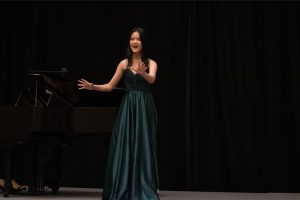
Veteran voice teacher Susan Eichorn Young reveals how cross-training benefits belters, who may secretly be high sopranos!
Over 30 years of teaching has led me to this secret about sopranos: could they actually be belters? In a word, yes. It’s possible. Let’s break it down.
Many of the “belters” in my studio are actually sopranos, even if they don’t know it, or didn’t know it! And, in turn, many of the sopranos I work with operatically have learned to find belt position. This is cross-training muscular and resonance and acoustic properties. You may never hear a musical theatre or pop belt voice sing soprano in public, but if they want to keep that belt healthy, they definitely work on it in the studio!
The same in reverse: classical and operatic sopranos have the physicality and acoustic to discover belt position. It doesn’t mean they have to use belt, but they can find the physical balance to access it. What I have found is that if we cross-train a soprano’s high extension into a high belt register, this will allow for an even stronger middle register in their classical and operatic balance.
If you don’t understand, or haven’t studied and figured out what “belt” is, yes, this can be scary. It’s okay to say “I don’t know” if you’re unfamiliar with belting technique as a classical singer. Belt isn’t wrong or bad. There is no value judgement on making sounds. They are choices and observations to discover what a singer needs. We need to remain open to discovery! I was a natural belter, and that was a million years ago, and I am still learning about the finesse of it all! So, how do we discover this “secret”?
First, by recognizing what belt is not. It is not pushing or yelling, or screaming. It is not pushing chest dominance higher. It is not pushing at all! So then what is belt? Again, there are many ways to define it, and as I continue to discover more, I might finesse my definition even more. But right now this is what I know: belt is a highly intensified fundamental pitch, with a wider (not spread, that’s not the same) vowel acoustic space, that is used to create and place in higher dramatic and emotional relief, a note or a phrase stylistically.
So, how do operatic and classical sopranos discover this secret? Start with observing how you approach a high B, high B flat, and high C operatically. What is happening acoustically? What is the formation of your fundamental vowel before it becomes more voluptuous? How are you shaping that fundamental? That position is the position of the belt acoustic an octave lower!
Remember, that acoustic position isn’t the same as muscular position. If you’ve never trained in this position, it will feel weak initially, until the muscles gain strength and familiarity in this position. But with the correct exercises to develop strength from the inside out, could you, a soprano, find it? Yes, I believe you could!
Belt is a stylistic acoustic. Style informs tone. Tone informs physicality, which houses and shapes tone. Tone can be shaped, manipulated, and molded to fit the style you are singing in through the physicality it inhabits.
Again, belt is not pushed tone. It is not nasal tone. It is not squeezed tone. It is not spread tone. Belt, as intensity of acoustic, really builds from the fundamental only. If that fundamental develops power and intensity, it gives the entire kaleidoscope of color and shape more dimension. This then influences so much of your voice in different ways and different positions, depending on what you are singing, in a very positive way.
A cross-training approach doesn’t mean a high soprano is going to be a belter, but it can strengthen your middle voice in a pretty remarkable way. If we approach the physicality of our instrument athletically (and we should, in my opinion), then discovering the balance of our instrument is crucial to discovering athletic proprioception. Just like working opposing muscles at the gym to balance, so should we do the same vocally. It wouldn’t make sense to work only biceps and not triceps, or quads and not hamstrings. The cross-training of vocal balance is just as crucial.
Can other voice types learn this too? Of course they can! Just know, sopranos, you have more superpowers than you might think, and the magic of it allows more possibilities vocally. When you discover these secrets, you aren’t singing with another voice, you are singing with your voice in a slightly different balance that can strengthen and access more of what you are capable of doing.
Leave the words “good” or “bad” at the door when you are exploring something new. Discover, explore, and reveal. Pick up what works and develop what your instrument needs. The secrets you discover don’t need to be shared outside the practice room, but can always be influential in your vocal development.
