The 4 Performing Levels – From Fear to Flow
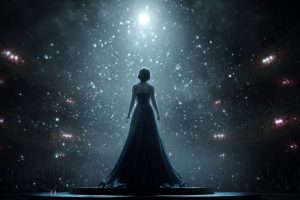
Have you ever walked off stage frustrated because the magic wasn’t there—wondering what happened and why you couldn’t perform with greater ease and flow? You know that flow feeling I’m talking about—when you don’t even have to think about your technique—it just comes out of you like a bird released from a cage, spreading its wings and fully enjoying freedom.
This magical state of flow is what most artists hope for before every performance and keep chasing all their lives. Yet for most artists, flow happens only by chance. Sometimes you slip into it, not even knowing how; other times, no matter what you do, the ease just isn’t available.
But here’s the good news: this deeply fulfilling state of performing flow doesn’t have to be a lucky accident. We now know that the experience of flow is a state of consciousness—and anyone can learn how to access it. Following is a short description of the four levels of consciousness through which your performances can feel like four completely different realities.
The Framework
First, let’s look at the chart. At the bottom, we have a horizontal line that represents all your experience and skills as an artist. This includes the time you’ve invested in building your vocal technique, developing your musicianship, and everything you’ve accomplished through effort and dedication to your craft.
Then, we have a vertical line that represents your spiritual and emotional experience as an artist—your search for meaning and purpose. It includes your vision, imagination, creativity, intuition, dreams, desires, and awakening to your full potential.
Along this vertical line is an emotional spiral:
- At the lower end are emotions like fear, shame, guilt, worry, and powerlessness.
- In the middle we find acceptance, hopefulness, confidence, and contentment.
- At the higher end are joy, gratitude, freedom, empowerment, service, and love.
This is important because the higher you rise on the vertical line—not just emotionally, but also spiritually as an artist, by finding your purpose, holding a vision, and connecting to your intuition—the more powerful your performing experience becomes, and the more consciously you can enter the state of flow.
The 4 Performing Levels
Where horizontal and vertical lines meet as your performing skills develop and your spiritual identity awakens, we find a continuum with four artistic levels. Recognizing these levels isn’t about labeling yourself; it’s about giving you a map, a way to consciously rise into flow rather than hoping it happens by chance.
Level 1: The Powerless Performer
The default emotional state of a powerless performer is fear. Fear of failure. Fear of being seen as imperfect. Fear of rejection, judgment, or criticism. The most common core belief of a powerless performer is I am not good enough, and it manifests primarily as anxiety. Their nervous system associates being in the spotlight with danger, activating a fight-or-flight or even freeze response when faced with challenges
Powerless performers might have great vocal technique, yet when it comes to performing or auditioning, something always distracts them from accessing ease and flow. They often feel powerless and stuck, like a desperate bird trying to escape its cage in search of freedom. Moving forward requires deeper inner work: transforming the feeling of never being good enough, facing the fear of rejection, and developing self-love, self-acceptance, and self-compassion.
Level 2: The Warrior Performer
The Warrior Performer is governed by control. A core belief of a warrior performer is still I am not good enough, but at this level it shows up as an incredible drive to achieve success and prove their worth on stage. They keep everything under control, from refined vocal technique to strong stage presence. They are mentally strong, courageous, competitive, and fearless in chasing their dreams.
They believe in “fake it till you make it,” which takes them very far—yet if their efforts don’t meet with external validation and success, they often experience burnout and a loss of joy. Their admirable, action-oriented drive can become a limitation because it comes from a place of lack, I have to prove myself, rather than from inner alignment with higher purpose, intuition, and trust.
Level 3: The Empowered Performer
This is where the fun begins! Empowered performers operate from trust and intuition: the very reason they access the state of flow more often. Their main emotional states are freedom, excitement, and joy. And these states don’t just “happen” to them; they consciously create them.
Empowered performers have a vision much larger than simply becoming successful or proving their worth, and that’s what gives them the power to rise above fears and distractions. Their performances are beautiful to witness because their energy is contagious, their passion palpable, and their stage presence magnetic as they are fully immersed in their art.
They’ve done a lot of work to get where they are, but their true power comes from knowing they don’t have to control everything. Instead, they let go and enjoy the ride—like a bird released from a cage, flying free in the open sky.
But, believe it or not, there’s still another level!
Level 4: The Divine Performer
This level is where magic happens. Divine artists become one with the music. They are the story, the composer, and the orchestra—they even merge with their audience as one experience. Through their performance, they transport everyone out of ordinary reality. They perform from a place of love, gratitude, and service. When you witness a truly divine performer, the experience is beyond words—transcendent, deeply soul moving, even therapeutic. Time seems to stop, and you find yourself breathless and completely mesmerized.
At this level, you’re not just the bird flying free, you become the sky itself. There are many artists who have earned their place on the world stage as truly divine, —Maria Callas, Leontyne Price, Franco Corelli, and Kiri Te Kanawa, just to name a few. But it’s not just their undeniable vocal excellence or flawless legato that makes them otherworldly, it’s the energy behind their presence. We’ve all seen breathtaking performances by children whose voices may not yet be fully developed, yet whose emotional purity and connection to something beyond themselves make their stage presence transcendent, soul stirring, and even life changing.
The Truth
You can have perfect vocal technique yet perform at the powerless level, and vice versa. Your technique might not be flawless, and yet you can tap into the divine performing level and deliver a deeply moving performance. Of course, the stronger your technique, the easier it is to let go and access the transcendent state of flow.
But more important than technical flawlessness is your ability, once on stage, to get out of your own way and connect to something larger than yourself. In doing so, you become a channel for the divine power of music to move through you—and the ease and flow in your voice will naturally follow.
A Quick Guide to Flow
You have aspects of each artistic level within you—sometimes feeling powerless in your circumstances, other times entering a beautiful flow state, even touching the divine level and channeling pure inspiration through you. The question is What level is your default state? And do you know how to move from one level to the next—consciously—so you can enter the flow state not by chance, but by choice? Once you identify your default state, you can focus on working toward the next level by transforming the core limitations that hold you back.
- For Powerless Performers: Transform the fear of failure, judgment, and rejection into self-love, self-compassion, and self-acceptance, and build a positive relationship with “living in the spotlight.” This shift must happen on a somatic level, not just an intellectual one.
- For Warrior Performers: Move from control to trust by learning to follow your intuition and connecting to a purpose larger than simply achieving success.
- For Empowered Performers: Transcend excitement, joy, and passion into a place of love and gratitude, opening yourself to the divine power of music so your art becomes selfless service and a contribution to the greater good.
Wherever you are on the spectrum, the goal is to cultivate inner freedom from fear, self-judgment, and limiting beliefs; to develop emotional intelligence; to reconnect with the real reason you chose to be an artist; and to anchor into a purpose bigger than personal success.
When you do this, you become a divine performer every time you step on stage, because the divine level is not a rare gift reserved for a chosen few—it lives within you, waiting for the moment you choose love over fear.
