One new book published by Routledge explores valued vocal traditions, and the other makes the case for change.
Follow your heart, and don’t give up. We believe you will be led up, down, and around the perfect path for you. Work hard and you can achieve anything. We see it happening for you! Yes, it is time for you to SHINE!
Dr. Aston shares a mysterious missing range in a patient, and the medication change that solved it.
Your artistry, expressed. At Hartt, growth in technique and musicianship, guided by distinguished faculty, is the focus of vocal study. The Hartt School provides a one-of-a-kind experience for the emerging twenty-first century artist, teacher, and scholar.
Veteran voice teacher Susan Eichorn Young reveals how cross-training benefits belters, who may secretly be high sopranos!
Every good mezzo has probably sung Mozart’s “Smanie implacabilli” or “Voi che sapete” to work on legato and style or to satisfy that Mozart aria requirement for an audition. Below are eight arias that are sure to liven up any mezzos’ audition package.
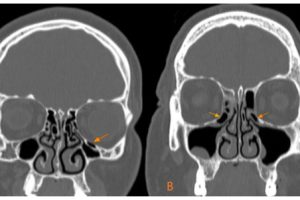
Haller cells are just tiny cavities between the maxillary and ethmoid sinuses. They are not always present and when they are there they are usually not a problem unless they are obstructing drainage of the other sinuses into the nose.
The Department of Voice & Opera is a vibrant and diverse community dedicated to fostering artistic excellence and academic rigor. Our students develop the technical proficiency and expressive depth necessary to excel in today’s artistic landscape.
Soprano Brittany Renee embraces challenging repertoire while prioritizing her personal life. Asking herself “Am I ready?” helps her focus on a growth mindset and see each point of her career as a learning experience.
What exactly is the function of the tongue? Explore the anatomy of the tongue and how it can benefit you!
You’ve probably heard your voice teacher say it a thousand times: “Fix your posture!” But did you know why they care so much? Posture isn’t just about looking poised; it actually has a profound impact on how your voice functions.
New Opera is the new norm. American Opera singers are not only expected to have mastered the standard repertoire, but also the skills to learn operas being composed today. But even now, the American operatic musical language is expanding and with it, the expectation of singers to arrive at workshops, first rehearsals, or even a coaching, with a solid understanding of the musical, vocal, and dramatic landscape.